Baby Book Club: The ABCs of Early Literacy
When new parents learn about my background in teaching reading and managing educational programs, the next question usually is, “How do I approach reading with my baby/toddler?” You have so much to worry about as a new parent, so let me take one thing off your mind – you don’t need to worry about reading. (Of course, there will come the developmentally-appropriate time when you’ll want to start getting ready for school and keeping an eye out for reading milestones, but that’s not in the first couple years.) Just the fact that you are reading this right now means you learned how to read at some point in life (and maybe you even like it). Well that’s one big roadblock out of the way – if a baby has a parent who can and wants to read with them, that baby is going to be a-okay.
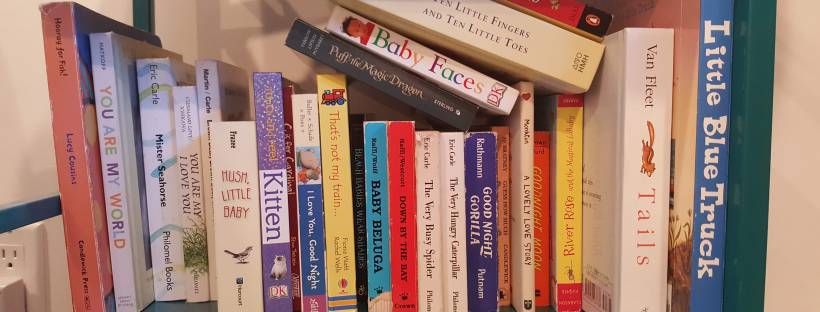
Second question – “What books do you recommend?” Here they are! My Baby Book Club list on GoodReads – these are my family’s favorites for 0-5 years old, with a few recommendations by close friends. I’d love more suggestions, so please comment below if I’m missing something amazing. (I didn’t include most of the classics that everyone knows about, like Goodnight Gorilla, because those are usually gifted to you, or always recommended everywhere. I want to give you new, juicy recommendations.)
While we have no way to guarantee our children will grow up with a love of reading, there are some habits we can begin in the first years to point our blossoming readers towards that beautiful, book-bedazled path. So won’t you grab your favorite warm drink IRL, and come join me over a virtual cup of coffee, as I share my favorite tips for building a home where reading is celebrated.
Enjoy it
If you’re going to be a model for your child, you need to authentically enjoy reading. Therefore, this is my number one rule – I don’t keep a book in the house if I don’t like it. Over the last 5 years I have made a few exceptions if my son really likes something. Otherwise, it’s donated or regifted. If he likes an especially annoying book, I’ll hide it on the bookshelf until he forgets about it for several months, then when I do the annual toy purge, and I come to that book, he’s usually forgotten all about it and he’ll be okay giving it away. This brings us to a secondary point…
Judge books
You don’t have to judge a book by its cover (though with kids books, you often end up doing just that), but definitely do judge books by your personal opinion. You’re the one that’s going to be reading that book every night. Here are the factors that weigh into my judgement and final decision on a book remaining on my child’s shelf:
- What’s the moral of the story? (Is that something I want to talk about with my kid?)
- Is it fun to read? (That could come from a myriad of sources – topic, rhythm, silly words, exciting story line, engaging characters, emotional reaction)
- Is it fun to look at? (Creative images, artistic drawings, engaging pictures for each stage of a baby or toddler’s development, or things like lift-the-flap or textured books)
- Are there good and appropriate role models? (Is this a character that my child can relate to, and if so, do I want him exhibiting the behavior we’re reading? I learned quickly we couldn’t read Calvin & Hobbes to my son because he became a nightmare.)
- Is the material going to work? Can my baby bite, gnaw, throw it, etc? (It’s going to happen…so plan on it! I love the indestructibles for this)
- Does it use correct language or does it portray concepts correctly? (Or do I need to use a Sharpie to change some words in the book…*cough* The Very Hungry Caterpillar – a butterfly builds a chrysalis, not a cocoon *cough*)
- Does it address a topic that is missing in our current selection? (I think about representation and inclusivity here – books about different cultures, holidays, a broad range of characters that expose my child to the diversity of our world)
- If you are halfway into it, and you don’t like it, it’s okay to put it down. My husband’s mom passed this rule onto him when he was reading chapter books, and it’s relevant here. She said, if you’re not into it 50 pages in, put it down, even if someone highly recommended it. For kids books, if you’re not feeling it, just put it down and move on. I call that trusting my gut. (This is specifically for adult preference; a baby might not like something right away, but you’re in charge, so until they can actually express a preference or dislike for a story or specific book, keep that book if you like it!)
Set realistic expectations
Plan to read for as long as your child will look at the book. When they move on, time to move on and try again later. Babies, toddlers and preschoolers have super short attention spans. Like, really short. Like 30 seconds to maybe a minute for a baby! There is varying information out there about how many minutes we can expect a child to pay attention, and of course if varies based on their age. I use a rule of thumb that you can’t expect a child to stay focused more than 3 minutes for every year of their age. However, I once had a wise mentor teacher tell me to only expect half their age in minutes. That would be 5 minutes for 10 year olds, and 1 minutes for a 2 year old. Of course, it varies based on the circumstances – personality, interest in the activity, other distractions around them (and their attention sitting in front of a TV doesn’t count). So what can you do? Let them read until they don’t want to! If you are forcing them to read a book, and they don’t want to, that’s not going to start an enjoyable relationship with reading, that’s going to turn into a power struggle, a tantrum, and a torn page.
Follow your child’s lead
Observe what your child is looking at, and respond to it. Basically, watch what you are doing that they enjoy, where their attention goes, and talk about it with them or do more of it! The Center for Developing Child at Harvard has an excellent term for this type of responsive interaction between child and caregiver – Serve and Return. This means that you don’t have to worry about a book being developmentally appropriate, just follow how your kid likes it; you’d be surprised by what books they find interesting, even if it’s not the “right” month for them. Sometimes my 6-month old baby wants to listen to me read big kid books out loud, and sometimes my 5-year old preschooler wants to go back to simple board books that he can “read” himself by looking at the pictures. I just follow their lead and try out different books throughout a month or a week. When I find something they like, I stick with it for a while, then gradually introduce new types of books.
Find what your family likes
Looking back at my big kid’s bookshelf, I’m realizing that there are several strong themes in our collection – rhythmic/rhyming, humor, real-life stories (not fantasy adventures), and nonfiction topics like rocks, dinosaurs, volcanos and animals. I didn’t plan on this, but over the 5 years of curating our little one’s collection, following his lead and narrowing down based on what he wants, this is where we are. Sure I’d love to read more about unicorns and crayons coming to life, but my son has said no and I followed his lead. When he was a baby, that means that I had a book I liked, and if he always turned away from it, I’d put it to the side, and try again in a couple months. I’d do that a couple more times before finally giving up. As he got older, he was able to crawl and walk towards books with covers and pictures he enjoyed. Even wonderful classics like the Story of Ferdinand never got a fair shot, because my son is partial to lots of color and detailed pictures. Nowadays, if I were to buy something he doesn’t like, we’d end up never opening it, so I don’t push it. (Although, every once in a while I buy a book that I really want and comes highly recommended, and he ends up loving it… more of a reason to check out a book at a library before buying.)
Dramatize and get silly with it
Anything you try with reading out loud is helpful to keep your kid’s attention and get them to enjoy the experience…only the absence of trying is detrimental – so just go for it! Do silly voices! Do character voices! Find a weird voice that’s easy for you, and make that your go-to for animal characters. Find a high voice, a low voice, and one accent, and use those for every story. One of our family favorites is A Day at the Airport, where my husband and I both do terrible accents for the pilot “Rudolf Von Flugel.” I’m sitting here giggling just thinking about our terrible renditions – imagine Werner Herzog tries to do Mike Meyers imitating Hans and Franz … Maybe you had to be there; but the point is, your child will love you for however you choose to act out the story, and you will enjoy it more when you mess up and it results in a hilarious inside joke. It’s like Yoda said, “Do or do not, there is no try.” It’s the same for reading – just by reading out loud as best as you can, you’ve done something special for your little one, and you should be proud.
Build reading comprehension
All skilled adult readers engage with a book without thinking about it, so to help your burgeoning reader, you can explicitly guide a baby, toddler, or school-aged kiddo to build the same habits. Here are some of the initial things you do every time you read:
- Make predictions based on the title and cover (“Oh look at this, Giraffes Can’t Dance? well of course they can’t, I’ve never seen them dancing at the zoo, have you? Wait a second, look at his leg on the cover, he looks like he’s dancing… I think the animals might actually dance in this book. What do you think?”)
- Ask “What do you think?” when your child asks a question. This is how you can always respond to kids. They ask a bunch of questions, and I always first respond with, “What do you think?” It puts the work of using their brains back onto them, and really helps avoid the endless cycle of “why”… in my work and home, it has led to more discussions, predictions, observations and confidence-building.
- Ask questions and make observations as you read each page… but sometimes don’t, because that gets tedious. Sometimes you can stop at every page, or a few times throughout a book. Sometimes you might not feel like doing this. That’s ok. What kinds of questions should you ask? Any type of question works, at any age. It’s okay if a baby can’t respond yet because you’re narrating the thought process for them. (Say things like, “What sound does a dog make? Woof!” With talking kids, they can participate. (Is that a squirrel on skis?! Where is he going? On the roof? Oh my, that’s high!… Oooh, roasted walnuts, do you think you’d like to eat that?)
- Make observations about emotions. Our culture doesn’t allow enough time for socioemotional learning, so let’s really help them have those conversations at home and build that social learning from a young age. (Those baby chicks sound worried. I wonder why? What do you think? For talkers – How does that make you feel?)
- Do shared reading. As you begin to repeat phrases in a book, your child will start to recognize the pattern and be able to fill in words that you leave it. (For instance, in Brown Bear, Brown Bear, you could say the beginning, and leave your child to say “What do you see?” Another easy way to do this is to leave out the last word of a rhyming book, because the rhyme makes it easy for a child to remember the next word. You can do this with babies by waiting a moment before you say the word, so they have a chance to predict what’s coming next, even if they can’t say it. Get ready for smiles and giggles.)
- Read the same books over and over and over and over and over…. Seriously, it’s so repetitive, but so amazing for brain development. It’s helping your baby, toddler and preschooler build and strengthen the neural pathways and connections in their brain. Not just reading the same book, but reading at the same time and the same number of books can be helpful with children’s understanding of their world. They practice recall and build memory skills. They feel a sense of achievement for remembering something and seeing it come to life as you read. They feel in control of something in their life because they remember they like a book, they ask you to read the book, and they see the words come to life over and over again, because of them asking you. That’s magical for a kid. And you are a magical person for facilitating this experience. You are magical. Just keep telling yourself that when you have to read Go, Dog, Go! for the 333rd time. (Honestly, it truly is a great book, it’s just that, wow, I’ve read that book a lot. Also, that book is great for teaching prosody, inflection and punctuation – basically, helping kids understand how words on a page relate helps us read out loud in a way that sounds like how we normally speak.)
Just engage!
- Tell your child how you feel about the books you read. Humans are social beings, and they learn best by observing social interactions. So make reading a shared experience, not just a task that is done for them and at them, but for you all as a family unit, taking on the world together. When we finish a book at night, lying in bed, I tell my son how I feel about it, what I liked, and we talk about it together. For my baby, I tell him the same thing (“Now that was a silly book! Look at that Gruffalo”). One of the best things you can do is reflect together, making a safe place to talk about likes, dislikes, and share honestly. Think about this safe space you’re building with them – that could be the foundation of many open discussions as they continue to grow into an adolescent, navigating peer relationships and the challenges of growing up. Yes, it can start with talking openly about books and discussing differing opinions about shared experiences.
- Pick a favorite. I LOVE the Circus Ship. This is a secret benefit of parenthood…you get to discover new amazing books. Not all children’s books will spark joy for you (in fact, most will not, even though they’re entertaining). But when you find that special gem that you want to read over and over again like a child, it’s such a gift. I know the Circus Ship by heart now, and after 3 years, I still beg my son to read it every night. We usually don’t, but it will always hold a special place in my treasure chest of life, and I’m not sure I’ll ever stop reciting it in my head.
Just think about it – you are the best teacher your child will ever have. Whatever habits you practice now, they will pick up. Reading with you is developing the connections in your child’s brain that will serve them for the rest of their life – that’s magical. Whether your baby is teething on it, your toddler is throwing it down, or your preschooler is screaming for you to read it again – you are guiding your child on the path of being a reader. With that book in your hands, you are a magician in your child’s eyes. Amazing.
Literacy extension activities
Here are a few ideas to continue exploring reading together with your baby and growing child.
- For a baby shower, instead of cards, have guests bring a book for the baby and write a gift inscription or sweet note for the babe inside the front cover.
- Make your own book! Use these 5×7 white blank books to fill in the pages. When baby is newborn, you can illustrate special moments on your own. With toddlers, you can start a design, write a caption and they can draw or color in the page. With growing preschoolers, you can write a story together about a special interest.
- Use books to help with routines and transitions – books about nighttime, going to bed, using the potty, and going to school are some tried and true methods to start a conversation and help your child navigate their big feelings about new events. My favorite nighttime book is Time For Bed, and I do animal sounds at each page.
- It follows that you can create a homemade book to prepare your child for important transitions – like a parent’s first overnight trip away from family, new sibling, or moving.
- For trips, bring along a few thin paperback books to keep your kid reading and busy. I like Richard Scarry’s Day at the Airport when we were flying, and Oh No Mr. Rabbit for car rides.
- Substitute your child’s name for characters in a book. Ask them to make new endings or new choices that change the story.
- Nonsense readings. My favorite thing that my husband does when reading at bedtime is messing it up by replacing words with incorrect ones, nonsense words, or names of characters from other stories or TV shows. Do this and watch your kid crack up so hard.
- When you’re not reading, talk about the characters and books you like, and make up new stories, plot twists, or friends/characters for them.
- If you’re kid is super interested in a hobby or topic, you can go all out with getting books, coloring books, and other things related to that item. Instead of buying them a toy from their favorite movie or TV show, get them a book that you can read together. Use books as your first go-to for gifts and activities, and just wait for the day when your 2 year old takes out a book and “reads” alone (looking at the pages), understanding that books can also serve as a form of entertainment, equal to TV.
For more information
If you want to learn more techniques, research and approaches to teaching reading and early literacy, there is of course a ton of information online. Here are some good ones to get you started.
An excellent book about supporting reading in the early years: Born Reading by Jason Boog. I love that he gives 15 general tips for growing readers:
- Read together
- Ask questions
- Share details
- Dramatize the story
- Help your child identify with characters
- Compliment your child as you read
- Discuss personal opinions about a book
- Follow the things your child loves
- Stop and talk about what happened
- Guess what happens next
- Continue the conversation
- Guide your child beyond what they already know
- Show your child the world outside your neighborhood
- Compare the story to personal experiences
- Encourage your child to recount the story
Websites:
Zero to Three’s parenting resource for 0-12 months, and this PDF with practices to promote early reading.
Early Literacy Count’s list of benefits of reading to your baby and ideas for more literacy activities.
 folks & kin